

By | Destiny Young
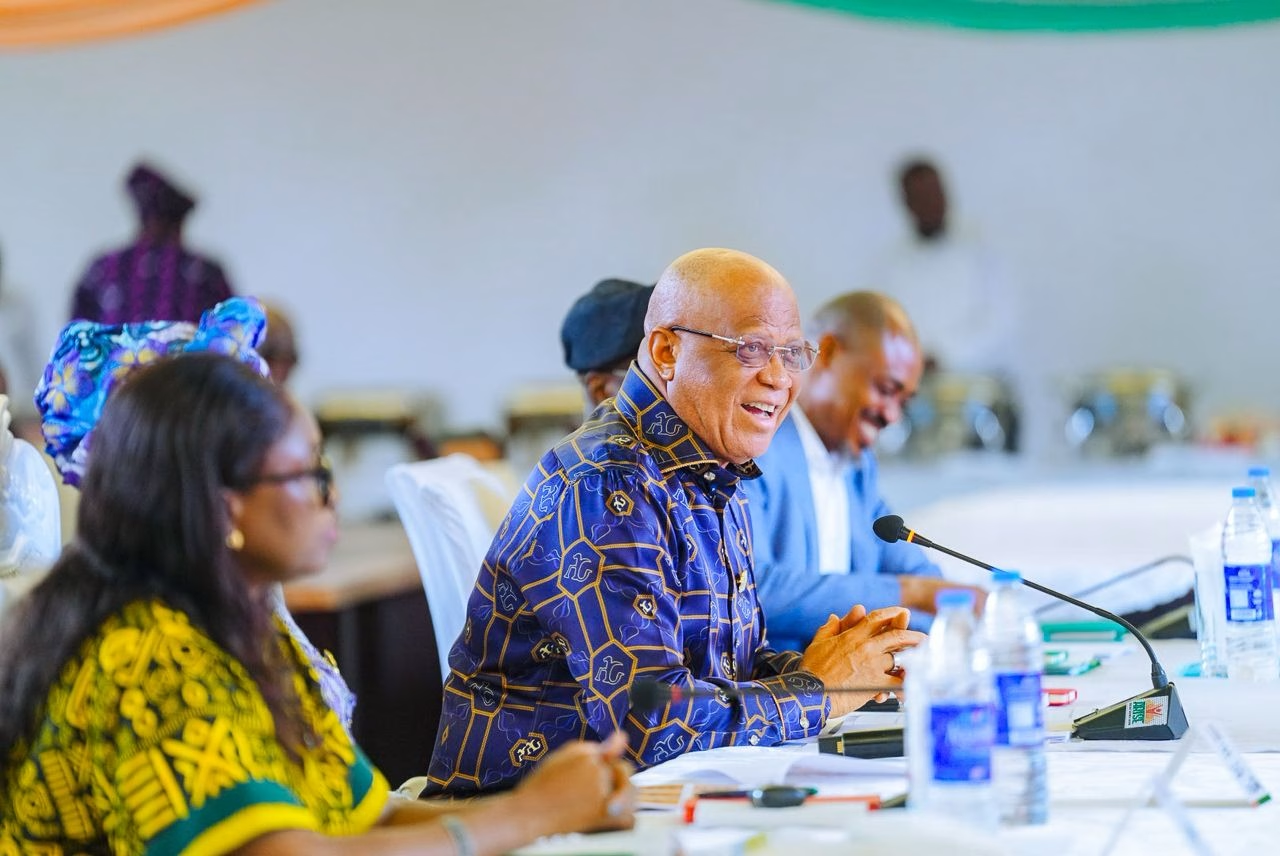
Governor Umo Eno’s latest steps on power reform suggest that the Akwa Ibom State Government is moving beyond rhetoric and towards a structured attempt to fix one of the state’s most persistent development problems. In a state with strong economic potential, unreliable electricity has remained a serious obstacle to industry, small businesses, public services and daily life. What now stands out is that the administration appears to be building a reform pathway with legal backing, institutional planning and clear implementation signals.
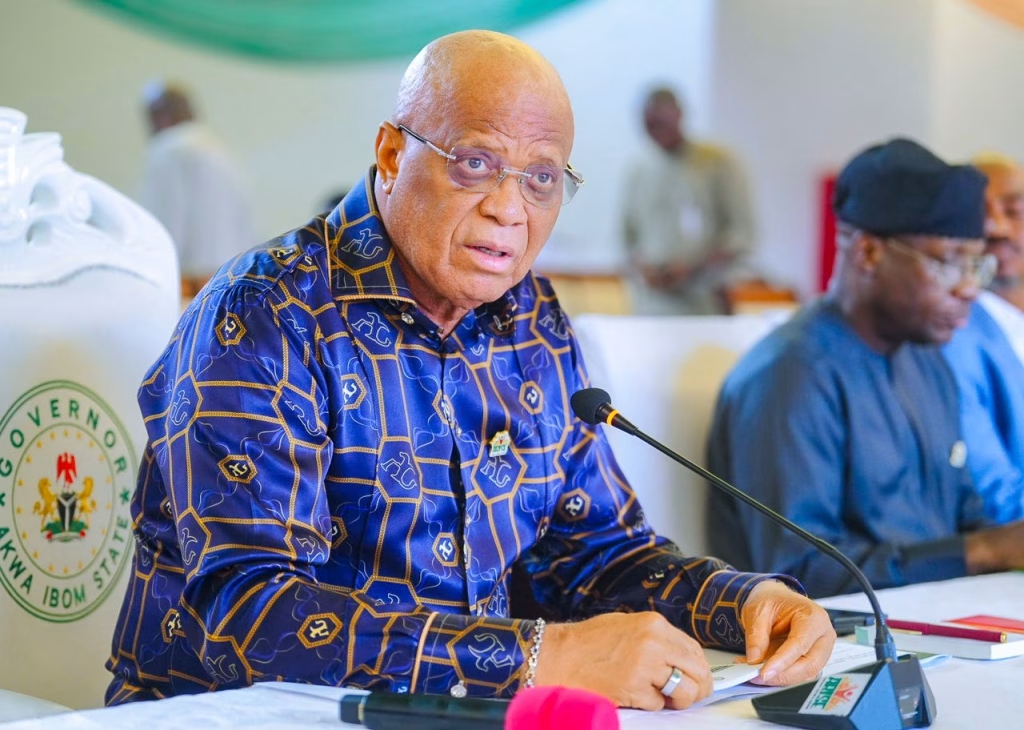
That is why the setting up of a Power Reform Committee, and the broader push behind the Akwa Ibom Power Agenda, should be seen as more than a routine government move. A committee, on its own, does not solve a power crisis. But in public policy, durable reform often begins with structure, coordination and a clear sequence of action. When government creates a mechanism to define priorities, align agencies, engage investors and drive execution, it signals a desire for a solution that can outlast headlines.
The closest example is the Treasury Single Account reform. Governor Eno has said Akwa Ibom’s monthly internally generated revenue rose from about N2 billion to N7 billion after the TSA policy took effect. That figure matters in the current conversation because it offers a recent example of a reform process translating into measurable results. The same methodical approach is now being applied to the power sector.
Power reform in Akwa Ibom is, of course, more complex than revenue reform. Electricity involves generation, distribution, regulation, infrastructure finance, market design and service delivery. It also requires hard decisions on legacy assets such as Ibom Power, rural electrification, private sector participation and the creation of a credible regulatory environment. Yet the administration has already laid part of that groundwork.
The state’s energy law has given Akwa Ibom a stronger basis to explore multiple options for more stable electricity supply. That is important because it means the state is no longer limited to waiting for federal solutions alone. With the right policy and legal framework, Akwa Ibom can pursue options such as state-led regulation, partnerships for generation and distribution, rural electrification projects, concession models and market reforms tailored to local needs.
Governor Eno has also made it clear that electricity is central to development. Power is not a side issue. It affects business growth, job creation, health services, education, security and the wider investment climate. Akwa Ibom cannot fully industrialise or expand enterprise if electricity remains unstable. Any serious development plan must therefore include a serious power plan.
Recent actions by the government suggest that it is trying to move from vision to implementation. The reform committee is expected to help shape that process, guide strategic decisions and support the wider agenda for a more functional power sector. If properly driven, such a committee can help government reduce policy drift, improve coordination and create a more credible path for investors and technical partners.
None of this means the public should stop asking questions. Akwa Ibom people have every right to demand timelines, transparency, investor clarity and service improvements that can be felt in homes, markets and businesses. Power reform should be judged by outcomes, not by announcements. The government will need to show how the committee fits into a wider delivery structure, what targets are being set, how legacy constraints will be addressed and when citizens can begin to see concrete improvements.
Still, there is a reasonable case for giving Governor Umo Eno the benefit of the doubt at this stage. The available signals point to an administration that is trying to address the state’s electricity challenge through policy, law, planning and institutional reform rather than through temporary fixes. When viewed alongside the TSA experience, it can be argued that the governor has shown a willingness to use structured reform processes to pursue measurable change.
Akwa Ibom’s power challenge will not disappear overnight. But enduring solutions do not begin with shortcuts. They begin with law, policy, institutions, financing and political will. On the evidence so far, Governor Umo Eno has shown commitment to that path.